Why Staying Busy on Personal Projects Is the Real Secret to a Good Retirement
- Date 21 June 2026
- Categories Career Growth, Career Life
- Comments 0 comment
There's a particular kind of busyness that doesn't feel like work. It's the kind where you lose track of time, where an evening disappears without you noticing, where you find yourself thinking about a problem in the shower or on a walk — not because you have to, but because you want to know how it ends.
For a lot of people, this kind of busyness only shows up around personal projects: the things nobody is paying you to do, the things that exist purely because you decided they should. I've come to think this is one of the most underrated skills a person can build, and it's one that matters more, not less, as retirement approaches.
The habit starts long before retirement
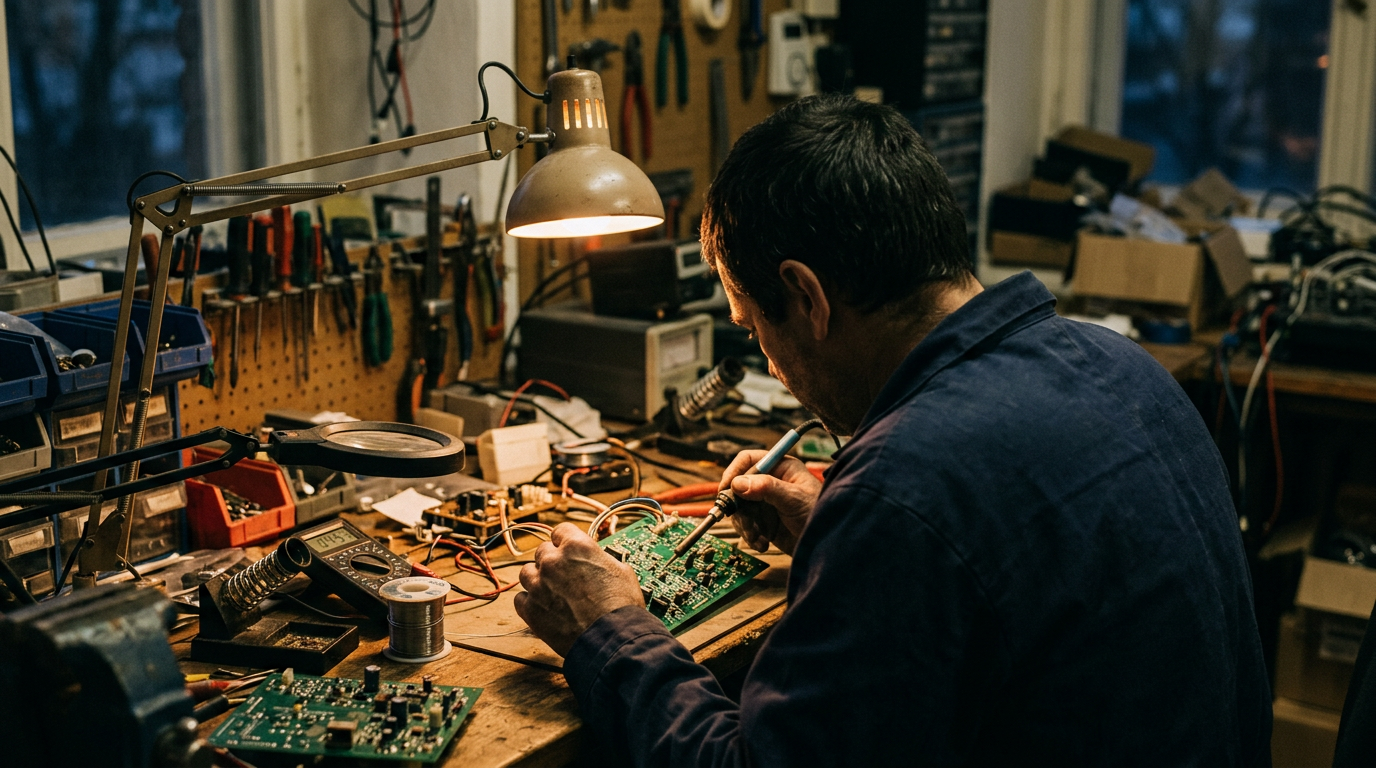
For years, I've worked on personal projects alongside my official work — not as a side hustle in the financial sense, but as a kind of parallel track that keeps my mind engaged in a different way. During the day, I do the work that's expected of me. In the evenings, weekends, and odd pockets of free time, I work on things I've chosen myself: building something, writing something, figuring something out. What's interesting is how this habit compounds. The more you do it, the better you get not just at the projects themselves, but at the meta-skill underneath them: generating ideas to entertain yourself. That sounds like a small thing, but it isn't. Most people are very good at consuming entertainment and quite out of practice at producing their own. Personal projects keep that production muscle alive. You start to see a quiet afternoon not as empty time to be filled, but as an opportunity — what could I build, explore, or finish today?
This matters enormously for retirement, because retirement removes the one thing that, for most working adults, structures their days and absorbs their mental energy by default: the job. When that disappears, the people who struggle most aren't usually the ones who lack money or health. They're the ones who never built the habit of generating their own momentum. They wake up with a free day and have no idea what to do with it, because for forty years, something else was deciding that for them.
Leave isn't just for holidays
Here's a small but telling example of how this mindset shows up day to day. When most people get a day of annual leave, the assumption is automatic: book a trip, relax, switch off. And there's nothing wrong with that — rest matters, and a proper holiday has real value. But I've noticed something in myself that I think is worth naming: I get genuinely excited when I have leave booked specifically to work on a personal project. Not a holiday. Not time off in the conventional sense. Just a clear, uninterrupted stretch of hours where I can sit down and make real progress on something I care about.
That excitement is a useful signal. It tells me the project has become a source of energy rather than a drain on it. It also reframes what "time off" even means. Time off from your job doesn't have to mean time off from effort or focus — it can mean redirecting that effort toward something you actually chose, rather than something assigned to you. For a lot of people, that distinction is the whole difference between a leave day that feels indulgent in a hollow way and one that feels indulgent in a deeply satisfying way.
This isn't about refusing to ever take a proper holiday. It's about recognising that not every form of rest needs to look the same, and that some of the most satisfying time off is the kind spent making progress on something that's entirely yours.
Why this matters more after retirement, not less
Retirement is often sold as an extended holiday — and for the first few months, that's roughly how it feels. But the appeal of constant leisure tends to fade faster than people expect. Structure, purpose, and a sense of forward motion turn out to be things most people need, whether they realised it while working or not. People who maintain engagement, purpose, and some form of productive challenge after leaving work generally report higher satisfaction than those who treat retirement purely as rest.
Personal projects are an almost perfect fit for this need, for a few reasons.
First, they're self-paced. There's no deadline imposed by anyone else, no performance review, no manager checking in. That removes the pressure that can make work stressful, while keeping the part that makes work meaningful: a problem to solve, a thing to build, visible progress over time.
Second, they're endlessly renewable. Unlike a single hobby that might eventually exhaust its novelty, the habit of generating personal projects means you're never short of a next thing to explore. One project naturally seeds the next. You finish modelling something, and now you're curious about presenting it differently. You finish writing something, and now you want to teach it to someone else. The habit feeds itself.
Third, they preserve identity. A lot of the difficulty people report after retirement isn't really about free time at all — it's about losing the sense of "what I do" that came from a job title or a daily role. Personal projects offer a quieter, more durable version of that identity. You're not simply "a retired accountant." You're someone who builds things, who's midway through a long-term project, who has opinions about how to do it better next time. That's a far sturdier foundation for a sense of self than a job title ever was.
Building the habit before you need it
The best time to develop this skill is well before retirement actually arrives, which is part of why it's worth talking about now rather than treating it as a problem to solve later. If personal projects are something you only start thinking about once your job ends, you're starting from zero at exactly the moment you most need momentum. But if you've spent years quietly running projects alongside your day job — generating ideas, following curiosity, finishing things just because you wanted to see them finished — then retirement isn't a cliff edge. It's simply a moment when one source of structure disappears and the other, the one you've already built, takes over almost seamlessly.
This is also why it's worth gently questioning the idea that every piece of leave should default to a holiday. Holidays are wonderful, and rest is genuinely necessary. But if the only thing you know how to do with free time is consume rest, you haven't built the muscle you'll need later. Treating some of your leave as protected project time — time to make, not just time to recover — is good practice for a future where most of your time will look exactly like that.
The takeaway
Staying entertained after retirement isn't really about having enough hobbies lined up. It's about having built, over years, the habit of generating your own ideas, your own momentum, your own reasons to get excited about a free afternoon. Personal projects, run quietly alongside whatever your official work happens to be, are one of the most effective ways to build that habit.
So the next time a few days of leave come around, it might be worth asking yourself: do I want this time to be a holiday from effort, or a holiday for the kind of effort I actually enjoy?

You may also like
Your Personal Brand Started Before You Said a Word